Bahia Palace is more than a historic residence. It is a showcase of Morocco’s traditional crafts, assembled at a moment when master artisans were still shaping royal interiors by hand.
Zellij tilework
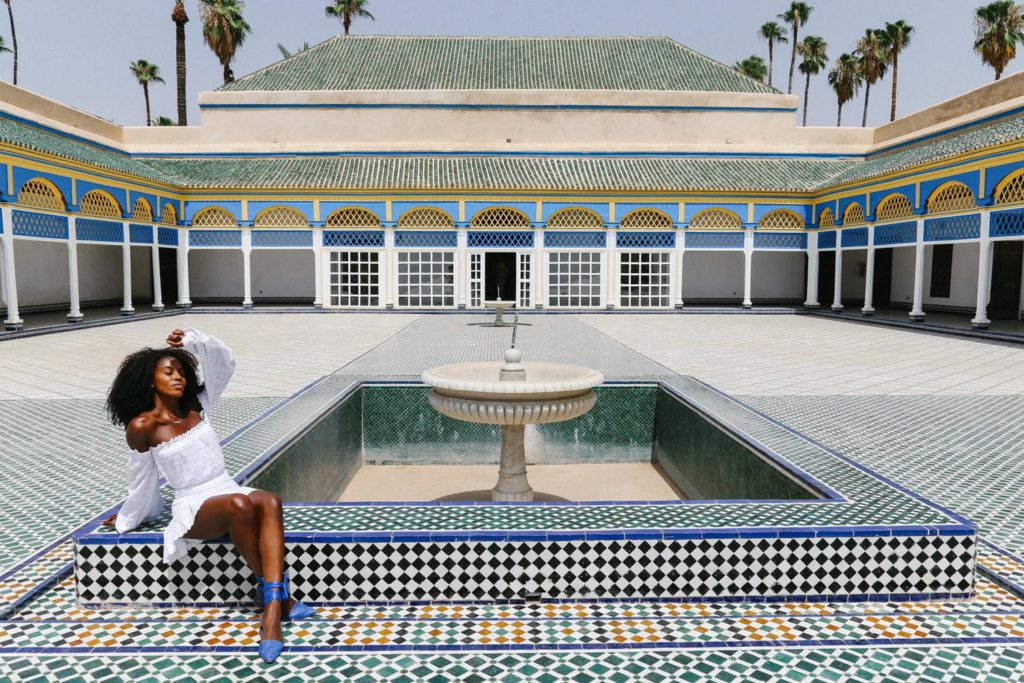
Throughout the palace, walls and floors are covered in zellij — small hand-cut tiles set into geometric patterns. Greens, blues, ochres, and whites combine to create surfaces that feel both mathematical and organic. No two rooms repeat exactly the same design.
Carved cedar wood
Cedar from the Atlas Mountains was carved into doors, screens, and ceiling beams. Floral arabesques, stars, and calligraphic forms demonstrate the skill of woodworkers who worked without modern tools. The scent of old cedar still lingers in several rooms.
Painted stucco and ceilings
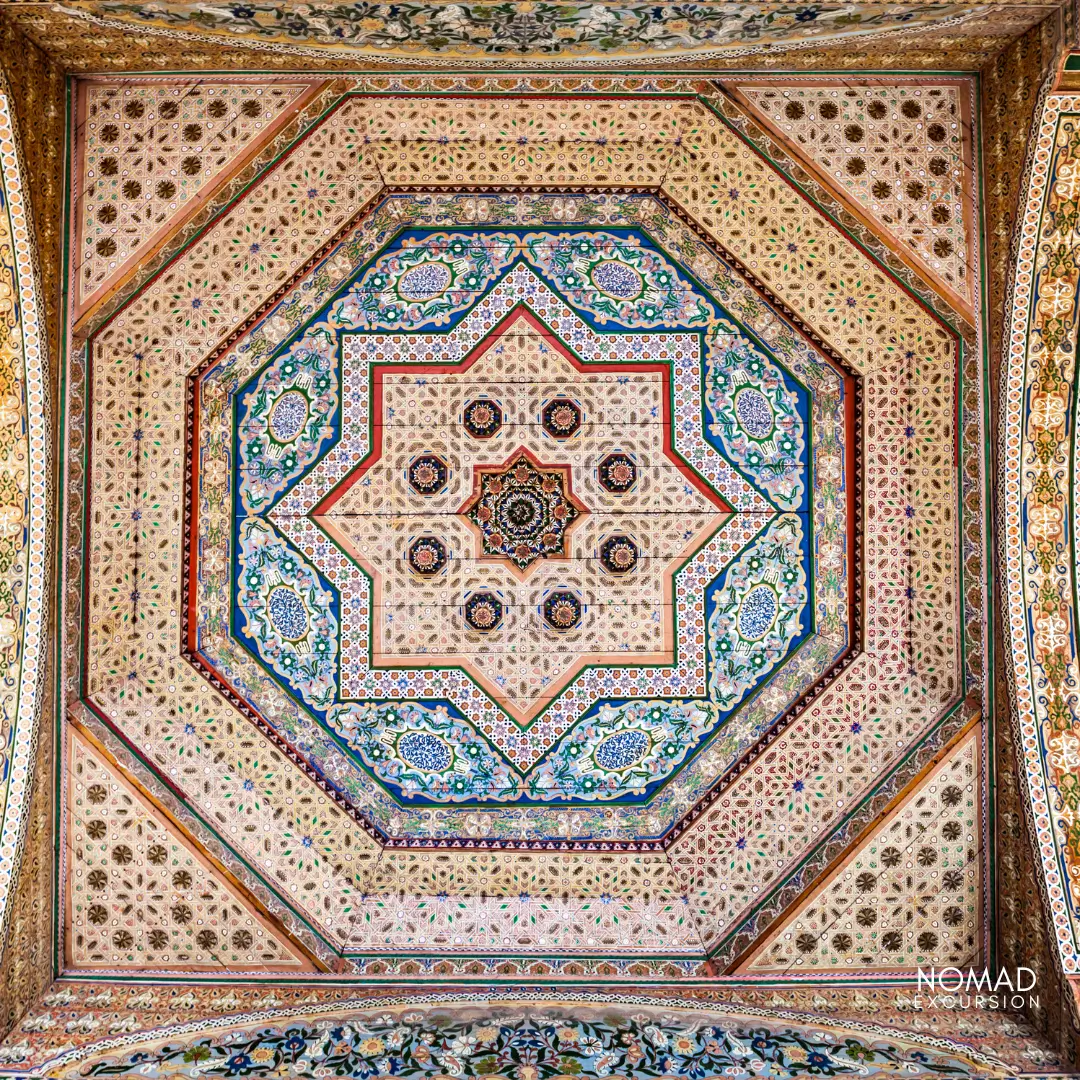
Stucco was molded into friezes and niches, then painted in vivid colors. Ceilings in particular are masterpieces of pattern: layers of ornament draw the eye upward and make each salon feel taller and more ceremonial.
Marble and courtyard design
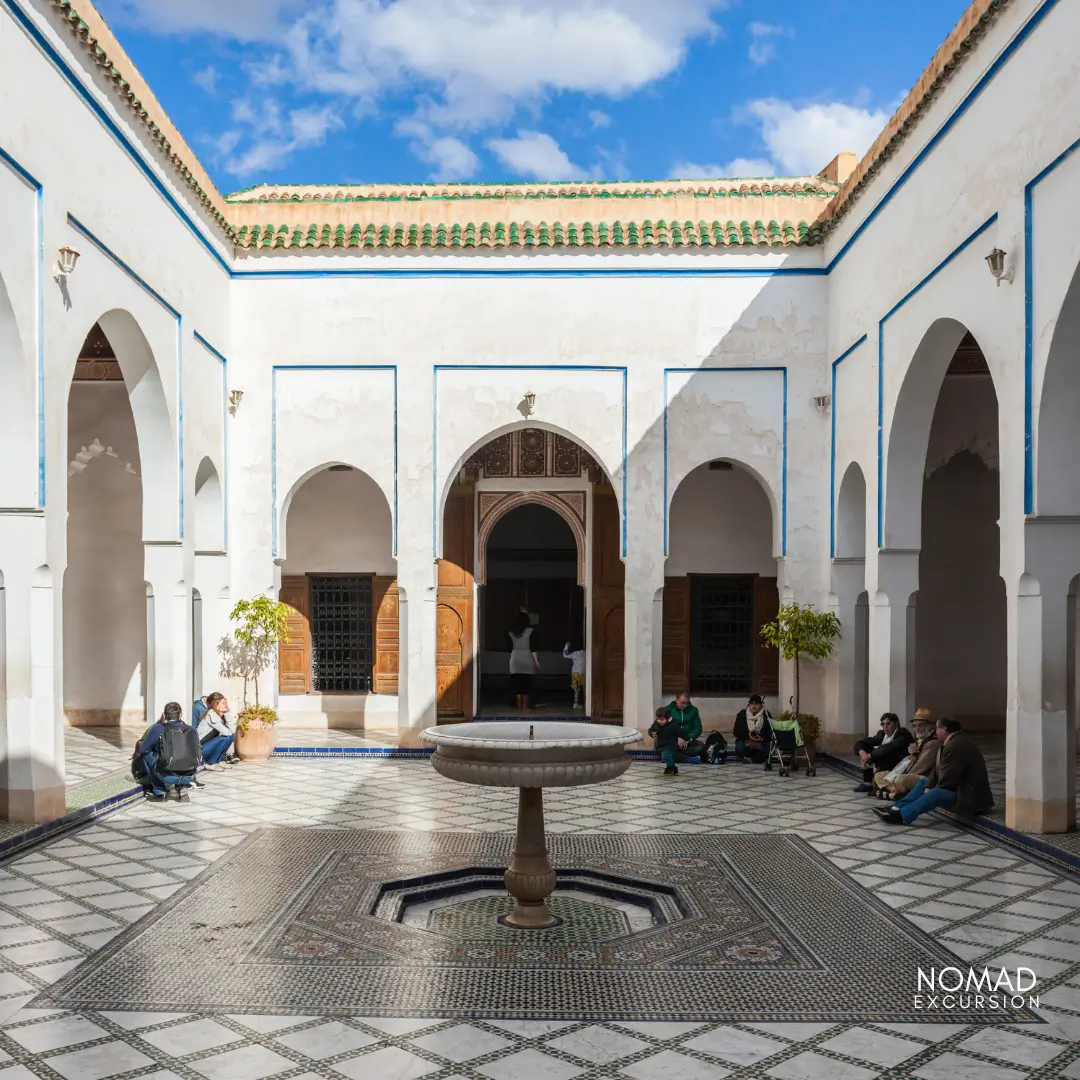
Large courtyards use marble and plaster together to reflect light and heat. Fountains and planting soften the hard surfaces, while symmetry gives the space a calm, ordered rhythm typical of Moroccan palace architecture.
Why it matters
Bahia Palace helps visitors understand how Moroccan design balances luxury with spirituality and geometry with nature. Take time to study the details — they are the real treasure of the visit.