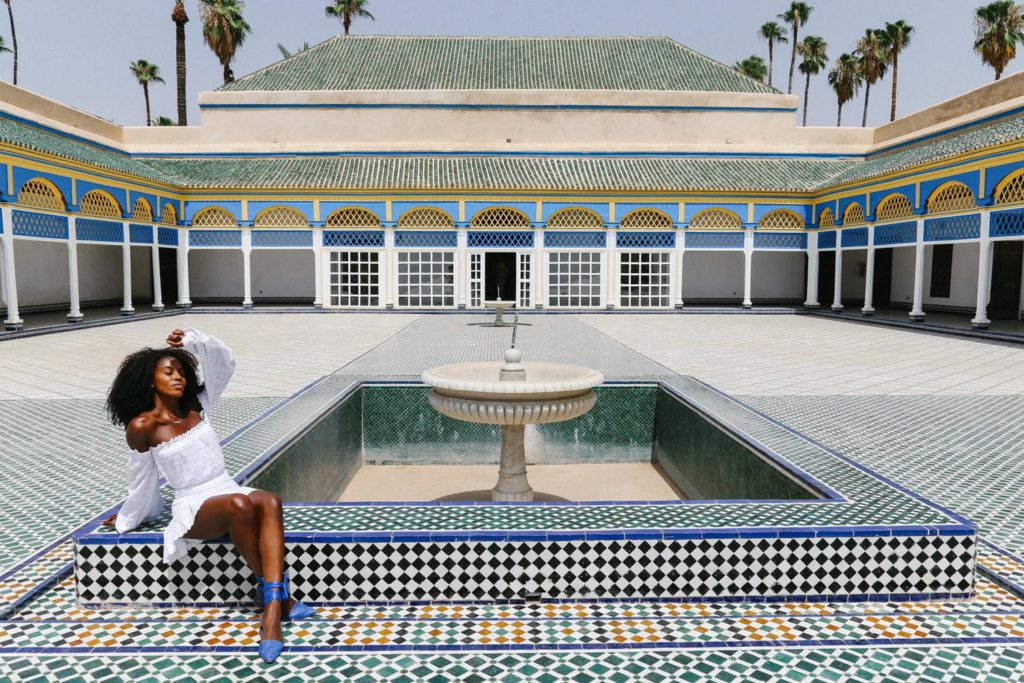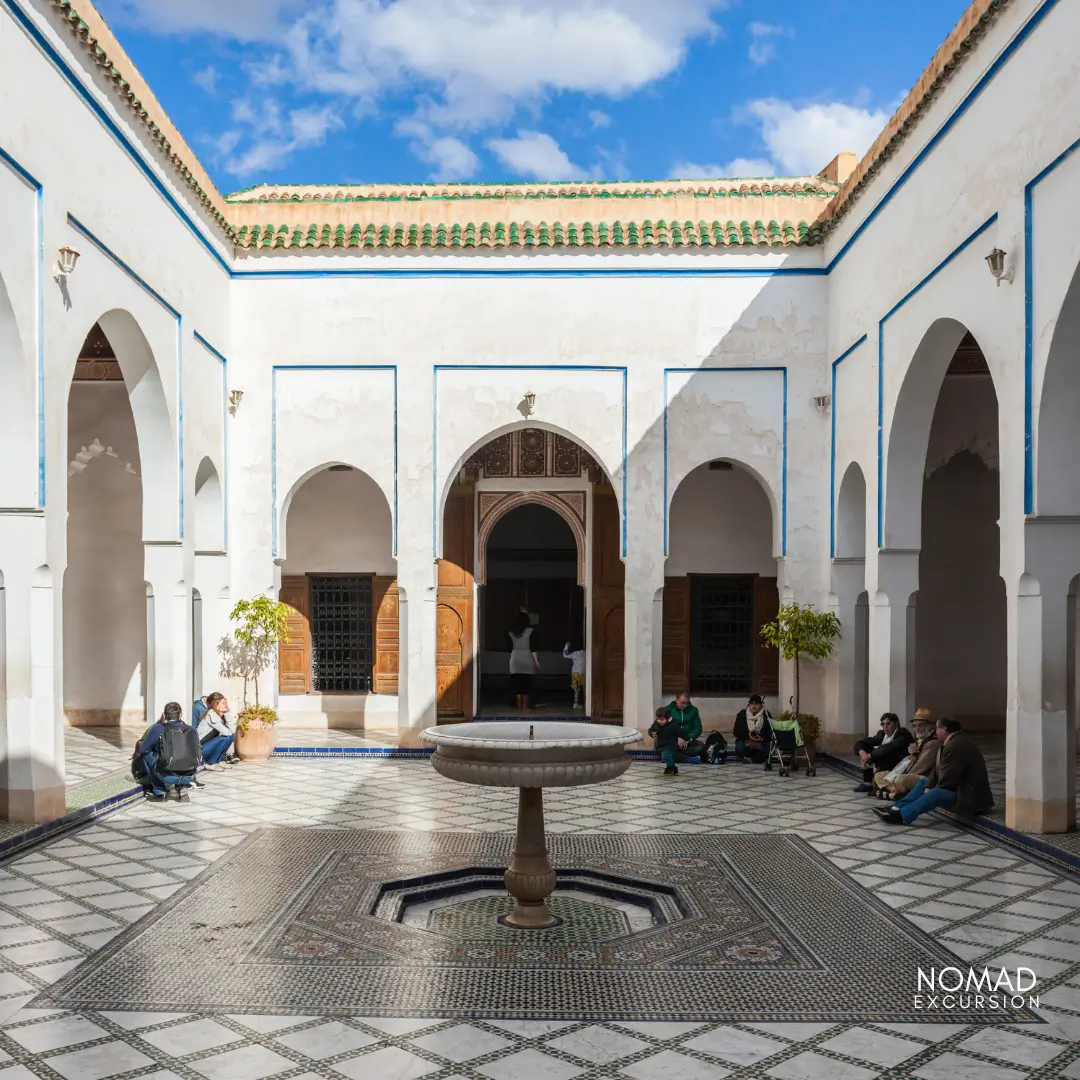
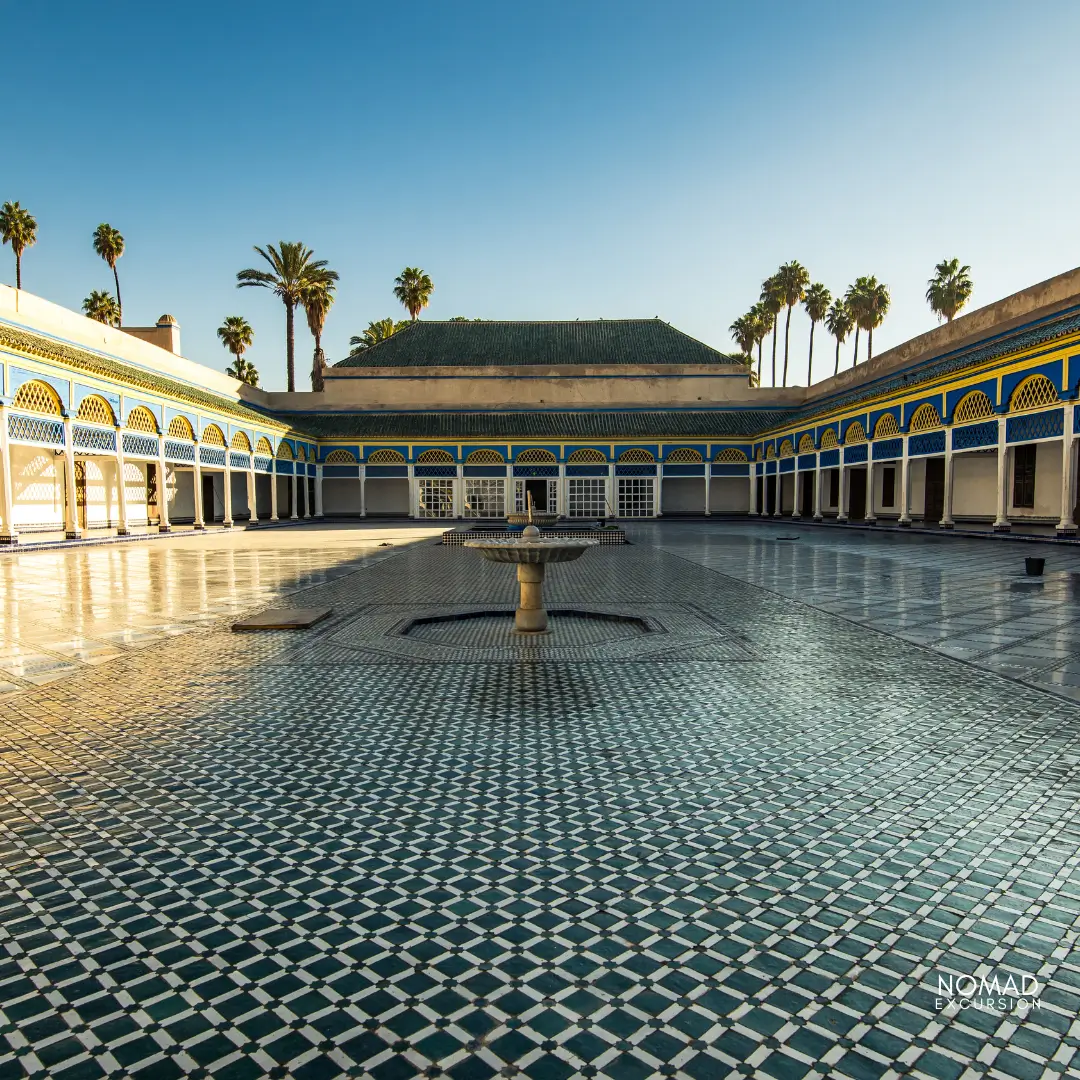
The Bahia Palace, located in the heart of Marrakech, stands as a stunning example of Moroccan architecture and the country’s rich cultural heritage. Built in the late 19th century, it remains a testament to the ambition, artistry, and royal life of its era.
Origins and construction
The palace was begun in the 1860s by Si Moussa, grand vizier to the sultan, as a private residence of remarkable scale. His son Ba Ahmed, also a grand vizier, later expanded and embellished the complex in the 1890s. The name Bahia means “brilliance” — a fitting title for a palace designed to impress.
Skilled artisans from across Morocco were brought together to create carved cedar ceilings, colorful zellij tilework, painted stucco, and marble courtyards. The layout follows traditional riad principles: rooms arranged around interior gardens where light, shade, and water balance the heat of the medina.
A royal residence
After Ba Ahmed’s death in 1900, Bahia Palace became a royal residence and remained closely tied to Morocco’s political and cultural life. Its grand courtyard, harem quarters, and reception halls hosted dignitaries and reflected the wealth of the Moroccan court at the turn of the century.
Preservation and today
Over the decades, restoration projects have protected the palace’s fragile decoration and structure. Today it is open to the public as a living museum — one of the most visited historic sites in Marrakech — where travelers can walk through rooms that once belonged to the country’s elite.
Plan your visit
Allow one to two hours to explore the courtyards, salons, and gardens at an unhurried pace. Pair your visit with nearby medina sights such as El Badi Palace or the Mellah for a fuller picture of Marrakech history.